
Views: 0 Author: Site Editor Publish Time: 2025-10-23 Origin: Site
Hafnium, a rare transition metal with the symbol Hf, has become an essential material across high-tech industries due to its unique properties. Known for its exceptional corrosion resistance, high melting point, and ability to absorb neutrons, hafnium plays a critical role in nuclear reactors, aerospace engineering, and advanced electronics. Baoji Taizehui Metal Technology Co., Ltd. (Tzhmet) specializes in producing high-quality hafnium products, including plates, rods, and hafnium tetrachloride, providing reliable materials for applications that require precision, stability, and durability under extreme conditions.
Hafnium’s versatility makes it a vital component in several industrial sectors. Its combination of mechanical strength, high-temperature tolerance, and nuclear properties ensures that it can perform in applications where few other metals are suitable. The following sections explore the main industrial uses of hafnium.
One of the most significant uses of hafnium is in nuclear reactors. Its thermal neutron capture cross-section is exceptionally high, making it an ideal material for control rods. These rods are used to regulate the fission reaction in nuclear reactors by absorbing excess neutrons.
Hafnium’s ability to absorb neutrons without becoming highly radioactive allows for precise control over reactor operations while maintaining safety. Unlike boron or cadmium, which can degrade faster under prolonged exposure, hafnium offers durability and consistency. Additionally, its corrosion resistance ensures long-term stability in harsh reactor environments, including exposure to hot, pressurized water.
In modern reactor designs, hafnium is often preferred in combination with zirconium alloys, creating control rods that maximize neutron absorption efficiency while minimizing interference with the surrounding coolant. This synergistic use enhances both reactor longevity and operational safety. Tzhmet’s hafnium rods are manufactured to meet stringent nuclear specifications, guaranteeing high purity and minimal impurities to ensure optimal performance in reactor applications.
Beyond nuclear applications, hafnium is a crucial component in aerospace and high-temperature alloy systems. Hafnium can be combined with niobium, titanium, or zirconium to create alloys capable of withstanding extreme temperatures, mechanical stress, and corrosive environments.
In aerospace engineering, hafnium alloys are used in jet engines, rocket nozzles, and hypersonic vehicles. The metal’s high melting point—over 2200°C—makes it indispensable in parts exposed to intense heat, such as turbine blades and combustion chambers. Hafnium’s ability to maintain structural integrity under thermal stress ensures safer and more reliable performance in aerospace systems.
Moreover, hafnium alloys are increasingly integrated into advanced heat shields and thermal protection systems. By forming thin, high-performance coatings on critical components, hafnium improves thermal conductivity and resistance to oxidation. Manufacturers like Tzhmet supply hafnium plates and sheets specifically designed for high-temperature applications, allowing engineers to fabricate components that meet rigorous aerospace standards. The precise processing and controlled impurity levels of these products guarantee performance and reliability for mission-critical systems.
While nuclear and aerospace applications are well-established, hafnium is increasingly being explored in electronics, chemical catalysis, and advanced energy research.
Hafnium’s high dielectric constant and chemical stability make it valuable in the electronics industry, particularly for advanced semiconductor devices. Hafnium oxide (HfO₂) is used as a gate insulator in modern transistors, enabling higher performance and lower power consumption in microprocessors and memory devices.
Additionally, hafnium is utilized in plasma electrodes and thin-film applications, where high resistance to heat and corrosion is crucial. These electrodes are critical in semiconductor fabrication and precision welding equipment, as they provide consistent electrical conductivity even under high-voltage and high-temperature conditions. Hafnium’s unique combination of electrical and thermal properties ensures long operational life and reliability in devices exposed to extreme conditions.
Hafnium compounds, particularly metallocenes, are increasingly used as catalysts in polymer production. These catalysts help control polymerization processes, improving efficiency, product quality, and environmental performance. Industries producing polyolefins and specialty plastics benefit from hafnium-based catalysts that allow precise control over molecular structures.
Beyond plastics, hafnium-based catalysts are being investigated for chemical synthesis processes in pharmaceuticals and fine chemicals. Their ability to promote specific reactions with high selectivity reduces waste and energy consumption, reflecting hafnium’s growing importance in sustainable manufacturing practices.
Research into hafnium-based materials for energy storage is ongoing. Scientists are investigating hafnium alloys and oxides as potential components in next-generation batteries, where high thermal stability and electrochemical resilience are required. Hafnium’s corrosion resistance and high-temperature stability make it an attractive option for electrodes and battery casings in high-performance energy storage systems. Although commercial applications are still developing, these studies highlight hafnium’s potential to contribute to future energy technologies, from grid-scale storage to advanced electric vehicles.
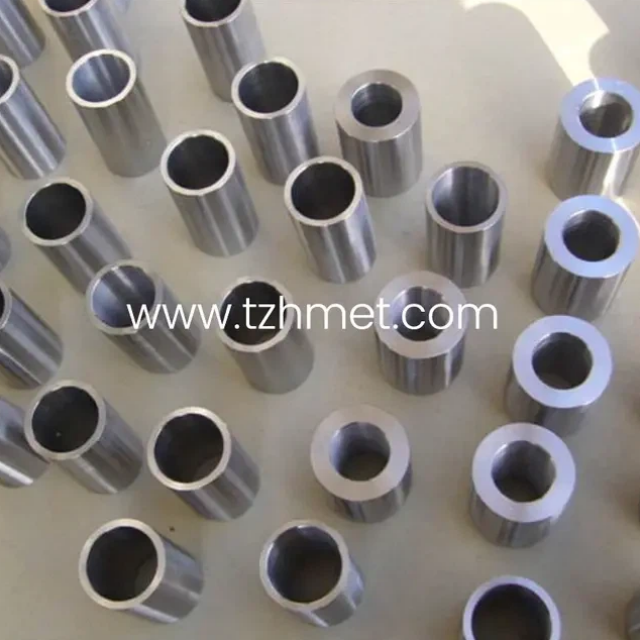
Hafnium is rarely found in its pure form and is usually extracted as a byproduct of zirconium processing. The close chemical similarity between zirconium and hafnium makes separation challenging, requiring advanced techniques to achieve high purity levels suitable for industrial use.
Limited production capacity, specialized extraction processes, and global supply chain considerations contribute to the high cost of hafnium. Only a few countries produce hafnium at industrial scales, making sourcing reliable materials critical for industries dependent on consistent supply.
Tzhmet leverages its expertise in rare metals to provide hafnium products that meet the strict requirements of nuclear, aerospace, and electronics applications. Our strategic production capabilities, advanced processing equipment, and quality control systems ensure that customers receive dependable materials for critical projects. By maintaining rigorous standards from raw material selection to final packaging, Tzhmet guarantees that every product delivers consistent performance for demanding industrial environments.
Hafnium is available in multiple forms, each tailored to specific industrial needs. Understanding the properties and applications of each form helps engineers and procurement specialists make informed choices.
Hafnium sheets and plates: Used in aerospace and high-temperature applications, these forms offer uniform thickness, exceptional mechanical properties, and resistance to oxidation and thermal fatigue.
Hafnium rods: Commonly employed in nuclear control rods, high-temperature alloys, and precision components, rods are precision-manufactured to meet strict dimensional and purity specifications.
Hafnium tetrachloride (HfCl₄): A key material in chemical processes and a precursor for producing high-purity hafnium metal, tetrachloride is essential for advanced research and industrial manufacturing.
When sourcing hafnium, buyers should consider several factors:
Certification: Ensuring material meets relevant industry standards for purity and performance.
Impurity limits: Even trace impurities can affect performance in nuclear and electronic applications.
Packaging: Proper packaging prevents contamination and maintains product integrity during transport.
Tzhmet provides a comprehensive range of hafnium forms, ensuring that customers receive materials optimized for their specific industrial requirements, whether for nuclear, aerospace, electronics, or chemical industries.
Hafnium’s real-world applications demonstrate its critical role across multiple industries:
Nuclear reactors: Hafnium control rods regulate neutron flow, maintaining safe and efficient energy production.
Aerospace components: Hafnium-based alloys are employed in high-temperature engine parts, improving performance and reliability under extreme thermal conditions.
Lamp electrodes: Hafnium’s resistance to corrosion and high melting point ensures longevity in industrial and scientific lamps.
The expanding use of hafnium in electronics, catalysis, and emerging energy applications further emphasizes its strategic importance across multiple high-tech sectors. These examples illustrate how hafnium’s unique properties provide solutions where conventional metals would fail.
Hafnium continues to be an indispensable material for industries requiring high-temperature resilience, neutron absorption, and chemical stability. Baoji Taizehui Metal Technology Co., Ltd. (Tzhmet) specializes in delivering high-quality hafnium products, including plates, rods, and hafnium tetrachloride, designed to meet demanding technical specifications. Companies in nuclear, aerospace, and electronics sectors rely on these materials for safe, reliable, and efficient performance. To explore our hafnium offerings or request datasheets and samples, contact us today for more information.
1. What industries commonly use hafnium?
Hafnium is primarily used in nuclear reactors for control rods, aerospace components, electronics, and chemical catalysis, thanks to its corrosion resistance and high-temperature capabilities.
2. Why is hafnium expensive compared to other metals?
Hafnium is costly because it is extracted as a zirconium byproduct, has limited production capacity, and requires advanced separation techniques to achieve high purity.
3. What forms of hafnium are available for industrial use?
Hafnium is supplied as sheets, plates, rods, and tetrachloride, each tailored for specific applications like aerospace alloys, nuclear reactors, and chemical manufacturing.
4. How does hafnium contribute to electronics?
Hafnium oxide is used as a high-k dielectric in semiconductors, improving energy efficiency and performance in microprocessors and memory devices.


