
Views: 0 Author: Site Editor Publish Time: 2025-11-14 Origin: Site
Nickels are a familiar part of everyday life, but do you know what they’re made of? The U.S. nickel has a rich history, with its composition changing over time to meet economic demands and technological advances.
In this article, we’ll explore the role of nickel metal in creating these durable coins and how its alloy has remained largely unchanged since 1866. You’ll learn why this composition endures and how it’s shaped U.S. coinage.
The U.S. Mint has relied on a specific alloy for nearly 150 years—75% copper and 25% nickel. Known as cupronickel, this mixture was chosen for its balance of durability and cost-effectiveness. Copper, an abundant and relatively inexpensive metal, allows for the efficient production of nickels. Meanwhile, the nickel component gives the coin strength, preventing damage from wear and tear. This combination creates a robust coin ideal for heavy circulation.
The composition of modern nickels has remained largely unchanged, even with fluctuating prices of raw materials. The enduring appeal of the copper-nickel alloy lies in its effectiveness; it provides a cost-efficient, durable solution for U.S. coinage.
Nickel metal contributes significantly to the production of durable coins. It strengthens the coin, making it resistant to scratches and wear, which is crucial for items that frequently change hands. Without nickel, coins would deteriorate far more quickly under the daily stress they endure. Additionally, nickel's corrosion resistance ensures that coins maintain their visual appeal and functionality despite exposure to environmental elements like moisture and air.
Other metals have historically been considered for coin production, such as silver, but nickel's unique properties have made it the preferred choice for modern currency. Its durability and cost-efficiency make it ideal for minting coins that must survive years of handling.
The first U.S. five-cent coin, the half-dime, was made of silver. However, by the mid-1800s, rising silver prices, compounded by the economic pressures of the Civil War, made silver increasingly unaffordable for everyday coinage. In 1865, the U.S. Mint introduced the three-cent nickel, using a copper-nickel alloy for the first time. This shift marked a pivotal moment in the history of U.S. currency.
The decision to switch from silver to a copper-nickel blend allowed the U.S. government to keep up with the demand for affordable small-denomination coins during a time of economic hardship. Nickel’s low cost and high availability made it a reliable alternative to the more expensive precious metals.
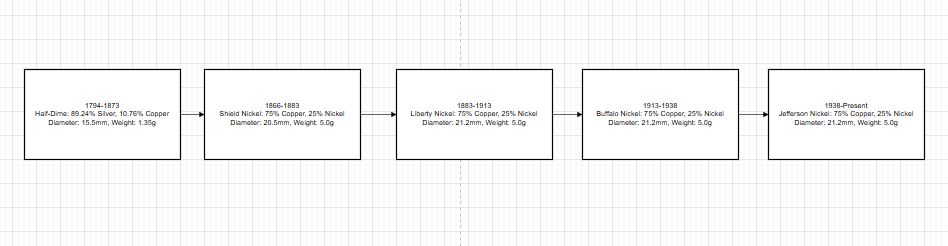
| Period | Coin Type | Composition | Diameter (mm) | Weight (g) |
|---|---|---|---|---|
| 1794-1873 | Half-Dime | 89.24% Silver, 10.76% Copper | 15.5 | 1.35 |
| 1866-1883 | Shield Nickel | 75% Copper, 25% Nickel | 20.5 | 5.0 |
| 1883-1913 | Liberty Nickel | 75% Copper, 25% Nickel | 21.2 | 5.0 |
| 1913-1938 | Buffalo Nickel | 75% Copper, 25% Nickel | 21.2 | 5.0 |
| 1938-Present | Jefferson Nickel | 75% Copper, 25% Nickel | 21.2 | 5.0 |
During World War II, the U.S. faced a scarcity of materials, including nickel, which was crucial for military production. In response to the urgent need for nickel, the Mint altered the composition of nickels from the traditional 75/25 copper-nickel alloy to a blend of 56% copper, 35% silver, and 9% manganese. This adjustment, known as the “war nickel,” was intended to conserve nickel for military use.
While the war nickel's composition was a temporary solution, it is a significant chapter in the history of U.S. coinage. After the war, the Mint returned to its original copper-nickel alloy, once nickel availability was restored.
| Composition Type | Copper (%) | Nickel (%) | Silver (%) | Manganese (%) |
|---|---|---|---|---|
| Original Nickel | 75 | 25 | 0 | 0 |
| War Nickel | 56 | 0 | 35 | 9 |
Following the war, the U.S. Mint resumed using the 75/25 copper-nickel alloy, a formula that had already proven its effectiveness in providing durable and affordable coins. The post-war era saw the introduction of the Jefferson nickel in 1938, which has been in circulation ever since. The decision to revert to the copper-nickel blend was driven by the alloy’s proven ability to withstand wear and tear, while also maintaining the characteristic appearance that Americans had associated with nickels for over a century.
One of the primary reasons nickel metal is used in modern coins is its ability to withstand heavy usage. The hardness of nickel helps prevent coins from becoming scratched or damaged, even with years of circulation. This durability is essential because coins are constantly being handled, transferred, and exchanged. Without the addition of nickel, the coins would lose their integrity much faster, resulting in coins that are less reliable and more prone to wear.
Additionally, nickel metal plays a critical role in enhancing the coin’s resistance to corrosion. Whether exposed to moisture, air, or extreme temperatures, coins made with a high percentage of nickel remain in good condition for longer periods.
Nickel may be more expensive than some alternative metals, but its long-lasting durability makes it cost-effective in the long run. With a coin that is durable and resistant to corrosion, there is less need to replace damaged coins, which would otherwise drive up minting costs. The longevity of nickel coins means that the U.S. Mint does not need to frequently reissue new coins, saving taxpayers money.
Furthermore, the nickel-copper blend has allowed for the consistent production of coins for over a century, helping the U.S. Mint maintain a steady, cost-efficient process for producing nickels. The overall affordability of this material makes it an optimal choice for large-scale minting operations.
| Property | Description |
|---|---|
| Hardness | Increases resistance to scratching and wear |
| Corrosion Resistance | Prevents oxidation, maintaining coin quality |
| Melting Point | High melting point (1455°C), stable at high temperatures |
| Magnetic Properties | Has certain magnetic properties, useful in industrial applications |
| Electrical Conductivity | Good conductor, suitable for electronic components |
In recent years, the rising costs of nickel and copper have sparked debates about the future of the current nickel composition. As these metal prices continue to climb, it has become more expensive for the U.S. Mint to produce each nickel coin. The pressure to cut costs may lead to discussions on reducing the amount of nickel in coins or seeking alternative alloys to keep the price of production manageable.
Some suggestions have included the use of steel or other cheaper metals, but these alternatives come with their own challenges. For example, steel may not offer the same durability and resistance to wear as nickel, meaning that further changes could affect the coin’s performance and longevity.
Another key consideration in the future of U.S. coinage is the environmental impact of mining and refining metals like nickel. As sustainability becomes a higher priority in manufacturing, the U.S. Mint has considered using more environmentally friendly materials to produce coins. The shift toward more sustainable metals could potentially lower the environmental footprint of the minting process while still delivering coins with the strength and appearance people expect.
Research into recyclable and sustainable materials is ongoing. The goal is to produce coins that are both durable and environmentally responsible, which would help align coin production practices with global efforts to reduce industrial pollution.
Furthermore, collectors often value the historical significance of coins, and any change to the nickel's composition could diminish the sense of tradition tied to the coin. Investors who have acquired older nickels might see shifts in their portfolios, as the market adjusts to these changes.
Nickel metal plays a vital role in creating long-lasting, durable products. In U.S. coins, the 75% copper and 25% nickel alloy provides the perfect balance of strength, corrosion resistance, and cost-effectiveness. This makes nickel essential for creating coins that withstand the wear and tear of daily use while retaining their appearance.
However, nickel's uses extend far beyond coins. Its remarkable properties—such as high resistance to rust, strength, and heat tolerance—make it indispensable in many industries. For example, nickel is a key component in stainless steel, which is used in everything from kitchenware to medical devices. The aerospace industry also relies on nickel alloys for parts that need to endure extreme temperatures and pressures.
Nickel is also crucial for the production of rechargeable batteries, particularly those used in electric vehicles. As the world moves toward sustainable energy, nickel's importance in energy storage and green technology grows significantly.

Beyond its role in coinage, nickel is an essential material in many critical industries. Its use in stainless steel makes it invaluable in construction, automotive, and manufacturing sectors, where strength and corrosion resistance are paramount. In the automotive industry, for instance, nickel is used in catalytic converters to reduce harmful emissions.
In addition, nickel is a major component in batteries, especially in the development of batteries for electric vehicles and renewable energy storage. Nickel’s ability to store energy efficiently helps improve the range and performance of electric cars, while also contributing to the growth of clean energy solutions.
Nickel’s ability to withstand harsh environments and its versatile properties make it indispensable in many high-performance applications. From its contribution to the strength of buildings and infrastructure to its role in modern energy storage systems, nickel metal’s importance cannot be overstated.
The modern U.S. nickel, made of 75% copper and 25% nickel, has long been known for its durability and cost-effectiveness. Nickel metal is crucial for ensuring the longevity of these coins, which withstand years of use. Despite challenges like rising metal prices and environmental concerns, the U.S. Mint continues to rely on this alloy due to its balance of affordability and resilience.
Looking forward, the future of nickel in U.S. coins is uncertain, but any changes to its composition will need to consider both economic and environmental factors. Nickel remains essential to the currency system, ensuring its lasting place in American commerce and history.Baoji Taizehui Metal Technology Co., Ltd. specializes in high-quality metal products, offering unique solutions that enhance durability and sustainability. Their products, including nickel alloys, are designed to meet the growing demand for reliable and cost-effective materials across various industries.
A: Modern U.S. nickels are made of 75% copper and 25% nickel metal. This copper-nickel alloy is durable and cost-effective, making it ideal for coins that endure frequent handling.
A: Nickel metal is used because of its hardness, corrosion resistance, and ability to withstand wear. It helps ensure that coins maintain their appearance and functionality over time.
A: The 25% nickel metal in the alloy provides strength, preventing scratches and corrosion, while the copper ensures cost-effectiveness, giving the coin a long lifespan.
A: Yes, the composition of U.S. nickels has evolved. During WWII, the composition was altered to conserve nickel, but since then, the standard 75/25 copper-nickel alloy has remained.
A: Nickel metal offers excellent durability, resistance to corrosion, and strength, which ensures coins remain in good condition even after extensive use in circulation.


